Sector exposed to mounting pressure


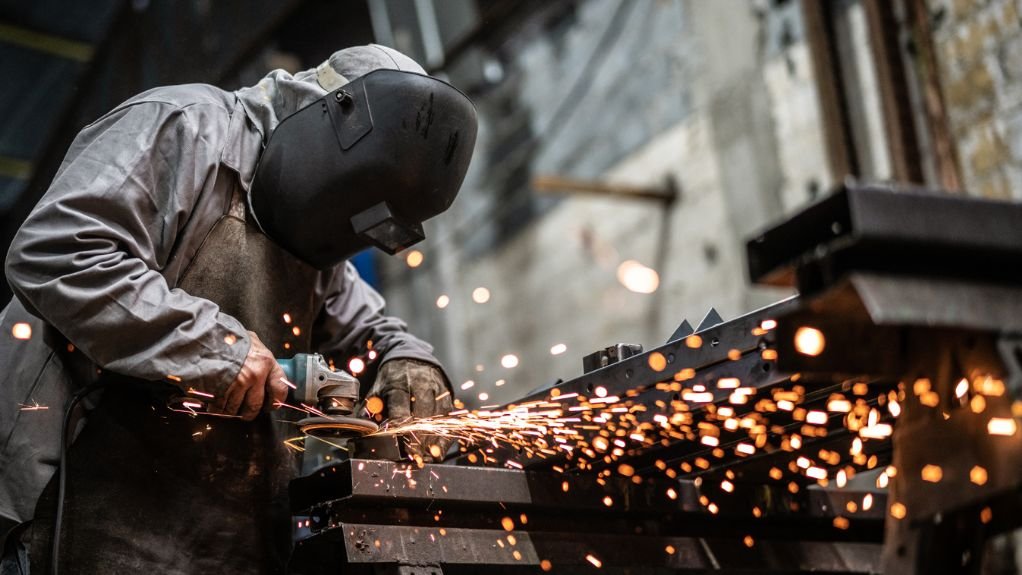
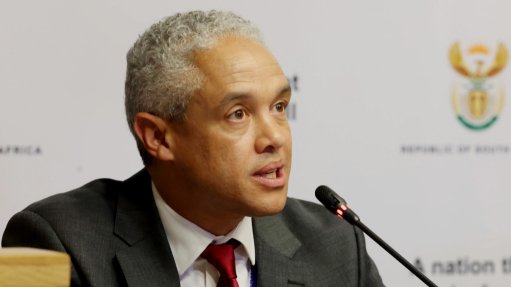
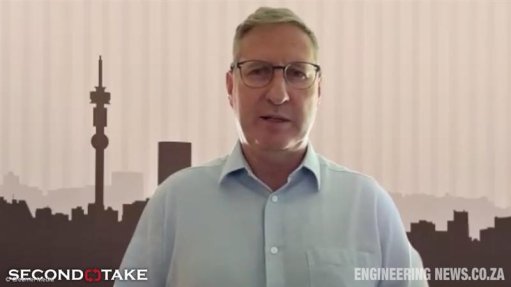
ARONI CHAUDHURI Since China is both the largest producer and consumer of steel, weak domestic demand has global consequences, with excess output being redirected into export markets, such as South Africa
GLOBAL CONSEQUENCES As the largest producer and consumer of steel, weak domestic demand in China has global consequences, as the excess output is redirected into export markets



South Africa’s steel industry remains vulnerable to global market distortions, especially with the continued flow of low-priced Chinese imports, says trade credit insurer Coface Africa economist Aroni Chaudhuri.
From a global perspective, the steel cycle has remained mostly unchanged over the past two to three years and is unlikely to improve in the near term.
This is likely because of the construction and industrial sectors, the two main drivers of steel demand, being weak in the main economic areas. Chaudhuri believes that this weakness is a result of the tightening of monetary policy in 2023 and 2024, which, in turn, weighed on real estate and infrastructure investment, constrained public spending, and weighed on industrial demand.
“Steel prices have been under pressure . . . in terms of the global index, prices are down about 4%, and they were already at a low level. So, the price is stabilising at a low level,” Chaudhuri adds.
Production has also softened, with a 2% decline in global steel production in 2025, and China’s remaining central to these trends.
“Although output in China has fallen by about 4.5%, the country still accounts for about half of global production. At the same time, domestic demand has not kept pace with capacity and the steel market has been in a situation of oversupply. In China, the property market downturn has persisted for nearly six years, further reducing domestic steel consumption,” he says.
As the largest producer and consumer of steel, weak domestic demand in China has global consequences, as the excess output is redirected into export markets.
For countries such as South Africa, this dynamic creates direct exposure, as low- priced imports make it difficult for local producers to compete in an already subdued market.
Chaudhuri says price competition from cheap Chinese steel has been a major factor weighing on the domestic industry, citing local steel producers’ explanations for plant closures.
“The challenge is intensified by the changing global trade environment. The US has introduced tariffs on steel and aluminium, while the EU is likely to adopt measures linked to carbon emissions. Although different in design, these policies restrict market access . . . what’s happening is that the metals and steel markets are becoming increasingly fragmented.”
With more advanced economies introducing protective measures, “emerging markets that lack similar safeguards will likely face heightened inflows”.
Amid this context, the domestic outlook remains fragile, and Coface assigns South Africa a country risk rating of C, reflecting broader macroeconomic pressures.
“Metals as a sector are classified as very high risk. While certain metals, such as gold and copper, have benefited from stronger prices, steel is the only major metal [wherein] the price hasn’t surged in recent months,” he says.
South Africa’s structural constraints further complicate matters, “with energy shortages and logistics bottlenecks having raised operating costs and constrained output, increasing pressure on producers and their prices”.
These bottlenecks also affect overall economic performance.
“Local construction and manufacturing have not been consistent growth drivers for more than a decade. Weak industrial growth limits domestic steel consumption, reducing the steel industry’s ability to offset external pressures through internal demand.”
Moreover, Chaudhuri believes that decarbonisation will shape trade dynamics.
“As environmental standards tighten in export markets, production methods and energy sources will come under scrutiny. We know that over 80% of South African electricity supply is coal-based, so one can imagine that South African steel’s carbon footprint is quite bad.”
Adapting to these requirements will depend on reforming the electricity system and improving reliability before transitioning to greener supply.
Given all these constraints, Chaudhuri believes that growth prospects for the steel industry may lie beyond South Africa’s borders, with regional industrialisation in sub-Saharan Africa offering potential longer-term opportunity.
Although this will not provide immediate relief, he adds that South Africa remains the main steel producer in the region and expanding infrastructure across neighbouring economies could create new markets over time.
However, the immediate challenge remains global price pressures.
“With China continuing to dominate global manufacturing and steel capacity, and with demand in major economies expected to remain subdued, the competitive environment is unlikely to ease,” he concludes.
Article Enquiry
Email Article
Save Article
Feedback
To advertise email advertising@creamermedia.co.za or click here
Research Reports

Projects
Latest Multimedia
Latest News

Showroom

Sika South Africa is a trusted partner for the nation’s infrastructure, commercial, residential, and industrial sectors.
VISIT SHOWROOM
FLANDERS Southern Africa provides integrated solutions for mining and industrial operations, covering field services, automation, electrification,...
VISIT SHOWROOM
Press Office
Announcements
What's On
Subscribe to improve your user experience...
Option 1 (equivalent of R125 a month):
Receive a weekly copy of Creamer Media's Engineering News & Mining Weekly magazine
(print copy for those in South Africa and e-magazine for those outside of South Africa)
Receive daily email newsletters
Access to full search results
Access archive of magazine back copies
Access to Projects in Progress
Access to ONE Research Report of your choice in PDF format
Option 2 (equivalent of R375 a month):
All benefits from Option 1
PLUS
Access to Creamer Media's Research Channel Africa for ALL Research Reports, in PDF format, on various industrial and mining sectors
including Electricity; Water; Energy Transition; Hydrogen; Roads, Rail and Ports; Coal; Gold; Platinum; Battery Metals; etc.
Already a subscriber?
Forgotten your password?
Receive weekly copy of Creamer Media's Engineering News & Mining Weekly magazine (print copy for those in South Africa and e-magazine for those outside of South Africa)
➕
Recieve daily email newsletters
➕
Access to full search results
➕
Access archive of magazine back copies
➕
Access to Projects in Progress
➕
Access to ONE Research Report of your choice in PDF format
RESEARCH CHANNEL AFRICA
R4500 (equivalent of R375 a month)
SUBSCRIBEAll benefits from Option 1
➕
Access to Creamer Media's Research Channel Africa for ALL Research Reports on various industrial and mining sectors, in PDF format, including on:
Electricity
➕
Water
➕
Energy Transition
➕
Hydrogen
➕
Roads, Rail and Ports
➕
Coal
➕
Gold
➕
Platinum
➕
Battery Metals
➕
etc.
Receive all benefits from Option 1 or Option 2 delivered to numerous people at your company
➕
Multiple User names and Passwords for simultaneous log-ins
➕
Intranet integration access to all in your organisation